What Is a Directory Backlink?
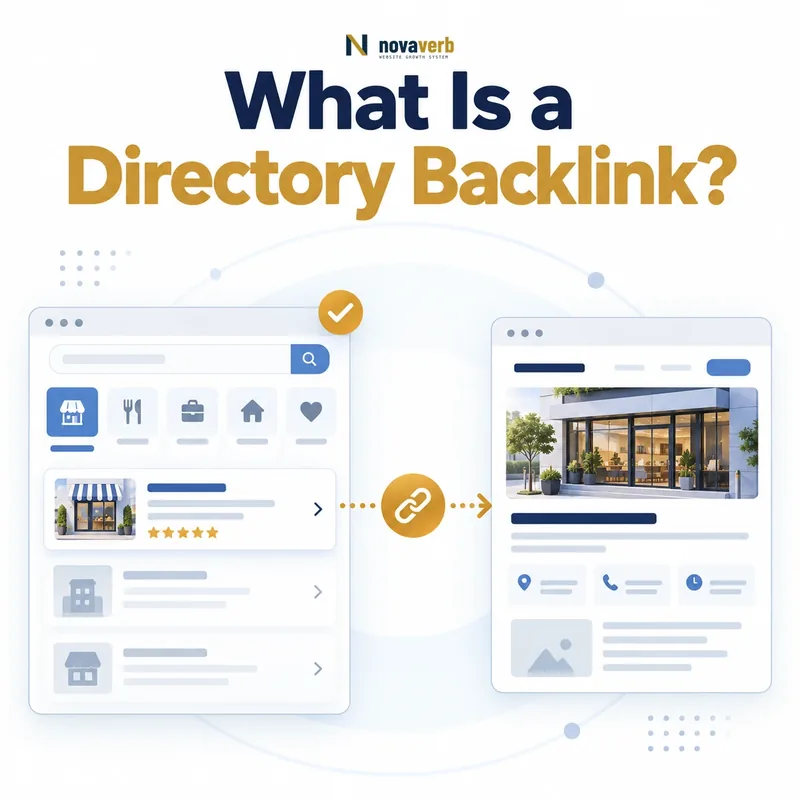
Examples include local business directories, professional associations, software marketplaces, industry member lists and public service directories. A directory link describes the source format, not its quality or relationship by itself.
A useful directory serves a defined audience and maintains accurate listings. An indiscriminate directory may accept unrelated sites, publish thin pages at scale or exist mainly to sell links. Inspect the exact listing and directory purpose before assigning value.
- Categorized discovery experience
- Defined audience or geography
- Individual listing or profile
- Name and destination link
- Business or resource details
- Directory inclusion policy
- Maintenance and correction process
- Identify the exact page, asset, entity or relationship described in this section.
- Inspect the live implementation and retain the observed evidence.
- Compare the observation with the intended meaning and its primary specification.
- Correct any mismatch, then retest the live result.
- Record the accountable owner and review date.
| Directory element | Question | Evidence |
|---|---|---|
| Audience | Who uses the directory? | Purpose and categories |
| Scope | What entities belong? | Eligibility rules |
| Listing | What information appears? | Profile fields |
| Link | Where does it send users? | Relevant destination |
| Maintenance | Can details be corrected? | Claim or update process |
| Relationship | Is inclusion free, paid or member-based? | Terms and records |
Primary specification: Google Search spam policies reference.
A directory backlink is useful when the source maintains a credible discovery system and the listing accurately serves its audience.
What Types of Directory Backlinks Exist?
Local directories help people find nearby services and often include address, phone, hours and categories. Niche directories help a specialist audience compare providers or resources. Association and marketplace listings usually reflect membership, integration or product eligibility.
General web directories require the most scrutiny because broad inclusion can remove meaningful audience fit. A directory being paid does not automatically make it useless, but payment changes the relationship and should be evaluated and disclosed honestly.
- Local business directories
- Industry and niche directories
- Professional association lists
- Software and app marketplaces
- Supplier and partner directories
- Chambers and local organizations
- Public service directories
- General web directories
- Identify the exact page, asset, entity or relationship described in this section.
- Inspect the live implementation and retain the observed evidence.
- Compare the observation with the intended meaning and its primary specification.
- Correct any mismatch, then retest the live result.
- Record the accountable owner and review date.
| Directory type | Primary user need | Typical eligibility |
|---|---|---|
| Local business | Find nearby provider | Location and category |
| Niche industry | Find specialist company | Industry relevance |
| Professional association | Verify member or expert | Membership criteria |
| Software marketplace | Discover compatible product | Technical or partner review |
| Supplier network | Find approved vendor | Business relationship |
| General web | Browse websites | Varies widely |
Classify the directory by the audience task and eligibility rule before comparing links from fundamentally different listing systems.
Directory Backlinks vs Local Citations
Local citation work prioritizes accurate identity and location data across sources used by customers. The link supports navigation but should not replace consistency checks for business name, location, phone, hours and category.
A niche online directory may provide a backlink without local identity fields, while a printed or unlinked business listing can be a citation without a backlink. Track the outcomes separately to avoid overstating coverage.
- Business name
- Address or service area
- Phone number
- Operating hours
- Business category
- Website destination
- Listing ownership and verification
- Identify the exact page, asset, entity or relationship described in this section.
- Inspect the live implementation and retain the observed evidence.
- Compare the observation with the intended meaning and its primary specification.
- Correct any mismatch, then retest the live result.
- Record the accountable owner and review date.
| Listing feature | Directory backlink | Local citation |
|---|---|---|
| Clickable website URL | Required | Optional |
| Business name | Usually present | Core field |
| Address | Optional | Common core field |
| Phone | Optional | Common core field |
| Geographic intent | Possible | Usually central |
| Primary task | Navigate to destination | Confirm business identity |
Track website links and local identity citations as related but distinct parts of a directory listing.
Are Directory Backlinks Valuable for SEO?
A local customer may use a chamber directory to find a service, while a buyer may use an integration marketplace to evaluate compatible software. Those listings can matter commercially even when backlink-provider scores are modest.
Broad, inactive or unrelated directories often add little audience value. Large submission counts can also obscure duplicated listings, wrong categories and stale destinations that require maintenance rather than celebration.
- Relevant discovery visibility
- Qualified referral traffic
- Accurate business identity
- Partner or membership verification
- Product ecosystem discovery
- Local customer navigation
- Supporting source diversity
- Identify the exact page, asset, entity or relationship described in this section.
- Inspect the live implementation and retain the observed evidence.
- Compare the observation with the intended meaning and its primary specification.
- Correct any mismatch, then retest the live result.
- Record the accountable owner and review date.
| Potential value | Required condition | Evidence |
|---|---|---|
| Referral traffic | Audience uses directory | Qualified sessions |
| Lead discovery | Listing matches need | Contacts or conversions |
| Brand accuracy | Fields remain correct | Audit consistency |
| Partner trust | Relationship is real | Membership or integration |
| Local visibility | Geography matches | Local actions |
| SEO support | Relevant live source | Separate search evidence |
A directory listing earns priority when it serves a real discovery journey and produces verifiable audience or business usefulness.
How Do You Evaluate a Directory Backlink?
Search and browse the directory as a user would. Check whether categories are coherent, profiles contain useful information, filters work and listed organizations appear legitimate. Test several outbound destinations and note whether broken listings are removed.
Review payment, membership, reciprocal-link and verification requirements. A legitimate fee for review, membership or marketplace operation is different from a hidden promise to sell ranking value, but the commercial relationship still belongs in the record.
- Open the directory homepage and exact listing
- Identify intended audience and category
- Review eligibility and submission rules
- Test search, filters and neighboring listings
- Check publisher identity and contact process
- Inspect outbound-link relevance and health
- Confirm payment or membership relationship
- Verify your destination and listing details
- Assign keep, improve, investigate or exclude
- The exact page, asset, entity or relationship covered by this section
- The live implementation rather than an editor-only preview
- The primary specification or first-party record defining the expected behavior
- The validation result, accountable owner and review date
| Evaluation factor | Strong evidence | Warning |
|---|---|---|
| Audience | Defined users and task | No clear user purpose |
| Relevance | Coherent category | Unrelated sites mixed together |
| Legitimacy | Identifiable operator | Anonymous network |
| Curation | Eligibility and review | Automatic bulk acceptance |
| Maintenance | Correction and removal process | Broken stale listings |
| Commercial model | Transparent service or membership | Selling ranking promises |
A defensible evaluation combines source purpose, category fit, listing accuracy, relationship transparency and live destination evidence.
When Do Directory Links Become Spam?
One weak directory record does not describe an entire backlink profile. Group suspicious listings by submitter, campaign, anchor, destination, network and timing, then confirm whether your organization controlled their creation.
Do not assume every unfamiliar directory is harmful. Scrapers and aggregators can create unrequested listings. Severe action requires stronger account, campaign or relationship evidence than an external provider label.
- Mass submissions across unrelated categories
- Keyword-stuffed business names or anchors
- Duplicated thin listing pages
- Required reciprocal linking
- Hidden paid ranking promises
- Networks with shared templates and ownership
- No correction or removal process
- Known controlled deceptive campaign
- Identify the exact page, asset, entity or relationship described in this section.
- Inspect the live implementation and retain the observed evidence.
- Compare the observation with the intended meaning and its primary specification.
- Correct any mismatch, then retest the live result.
- Record the accountable owner and review date.
| Observed pattern | Possible explanation | Next step |
|---|---|---|
| Many listings, same day | Bulk campaign or provider discovery | Check account history |
| Unrelated categories | Poor targeting or scraping | Verify control |
| Exact anchors repeated | Template or campaign rule | Inspect submitter evidence |
| No real directory users | Link-manufacturing site | Exclude from future work |
| Unrequested copied profile | Aggregator or scraper | Monitor before action |
| Known purchased network | Controlled manipulation | Investigate urgently |
Directory spam assessment should connect live source patterns with evidence of control and relationship rather than punish unfamiliar listings by default.
How Do You Build Legitimate Directory Backlinks?
Start with customer discovery paths: local institutions, recognized associations, product marketplaces, integration ecosystems and specialist directories. The objective is accurate presence where qualified users reasonably expect to find you.
Use a suitable deep link only when the directory category calls for a specific product, location or resource page. Otherwise, the homepage may be the clearest stable business destination.
- Define the audience and discovery task
- List relevant directory categories
- Verify eligibility and publisher legitimacy
- Check existing duplicate listings
- Prepare accurate canonical business data
- Choose the destination that fits the listing
- Disclose membership or commercial relationship
- Submit through the official process
- Verify the live listing
- Schedule accuracy reviews
- The exact page, asset, entity or relationship covered by this section
- The live implementation rather than an editor-only preview
- The primary specification or first-party record defining the expected behavior
- The validation result, accountable owner and review date
| Listing step | Required input | Quality control |
|---|---|---|
| Selection | Audience and category fit | Reject broad irrelevant lists |
| Identity | Canonical name and details | Prevent duplicates |
| Destination | Relevant stable URL | Resolve redirects |
| Description | Accurate plain-language summary | Avoid keyword stuffing |
| Relationship | Membership or payment record | Classify honestly |
| Maintenance | Owner and review date | Update changed facts |
Directory link building is legitimate when it improves accurate discovery for a defined audience and preserves transparent listing relationships.
How Do You Audit and Monitor Directory Backlinks?
Use Backlink Checker to discover representative directory sources and Backlinks Explorer to organize recurring domains, anchors and destination changes. Compare findings with the broader backlink profile.
Connect correction, duplicate removal and destination repair through the SEO tools system. Preserve login ownership, verification date, directory policy, payment or membership record and outcome.
- Inventory exact directory listing URLs
- Group local, niche, association and general sources
- Verify business identity fields
- Resolve website destinations
- Check duplicate and outdated profiles
- Review eligibility and commercial relationship
- Identify known controlled spam campaigns
- Keep, correct, consolidate, investigate or exclude
- Assign owner and retest date
- The exact page, asset, entity or relationship covered by this section
- The live implementation rather than an editor-only preview
- The primary specification or first-party record defining the expected behavior
- The validation result, accountable owner and review date
| Audit finding | Action | Completion evidence |
|---|---|---|
| Relevant accurate listing | Keep and monitor | Profile remains current |
| Wrong business details | Correct | Live fields verified |
| Duplicate profiles | Consolidate where possible | Canonical listing retained |
| Broken destination | Repair URL path | Valid final page |
| Irrelevant unrequested listing | Document and monitor | Control status recorded |
| Known deceptive bulk campaign | Stop and investigate | Accounts and evidence preserved |
A directory audit is complete when each priority listing has verified identity, destination, relationship, owner and next action.